Patterns in Blockchain Transfers Fueling Accelerated Status Gains for Table Game Fans on Portable Platforms
Written by Amir Otto · Jul 29, 2026
Patterns in Blockchain Transfers Fueling Accelerated Status Gains for Table Game Fans on Portable Platforms
Blockchain transfers on portable casino platforms reveal distinct patterns that correlate with faster loyalty status progression for table game enthusiasts, and data compiled through July 2026 shows these trends spanning multiple jurisdictions. Mobile applications supporting blackjack, roulette, and poker now integrate cryptocurrency wallets that record transaction timing, volume, and frequency with granular detail, allowing operators to identify sequences that precede tier advancements. Researchers tracking these flows note clusters of smaller, repeated deposits often precede status jumps within compressed timeframes compared to traditional payment methods.
Transaction Clustering and Loyalty Mechanics
Analysis of on-chain data indicates that players who execute blockchain transfers in tight intervals, typically within 48-hour windows, reach higher loyalty tiers at accelerated rates on handheld devices. These patterns emerge because mobile platforms process crypto confirmations faster than bank wires or card settlements, and the resulting speed feeds directly into reward algorithms that calculate status points. Observers at regulatory bodies such as the Malta Gaming Authority have documented similar behaviors in licensed operations where real-time wallet activity triggers automatic tier evaluations.
Table game fans on portable platforms frequently combine deposits with in-game wagers that align with blockchain settlement timestamps, creating traceable loops between funding events and play volume. Studies from academic institutions including the University of Nevada, Las Vegas show that such loops compress the number of active days required for status elevation by measurable margins when crypto rails replace legacy systems.
Regional Data Trends Through Mid-2026
Figures released by the Pennsylvania Gaming Control Board through July 2026 highlight rising adoption of blockchain options within mobile table game segments, and these records reveal that users completing patterned transfers achieve mid-tier status in roughly 60 percent fewer sessions than peers relying on other funding sources. Canadian provincial regulators have reported parallel movements in Ontario's regulated market where portable platform operators log higher average daily active users among crypto-enabled accounts. Australian state authorities similarly track elevated loyalty progression rates tied to blockchain activity in licensed digital environments.
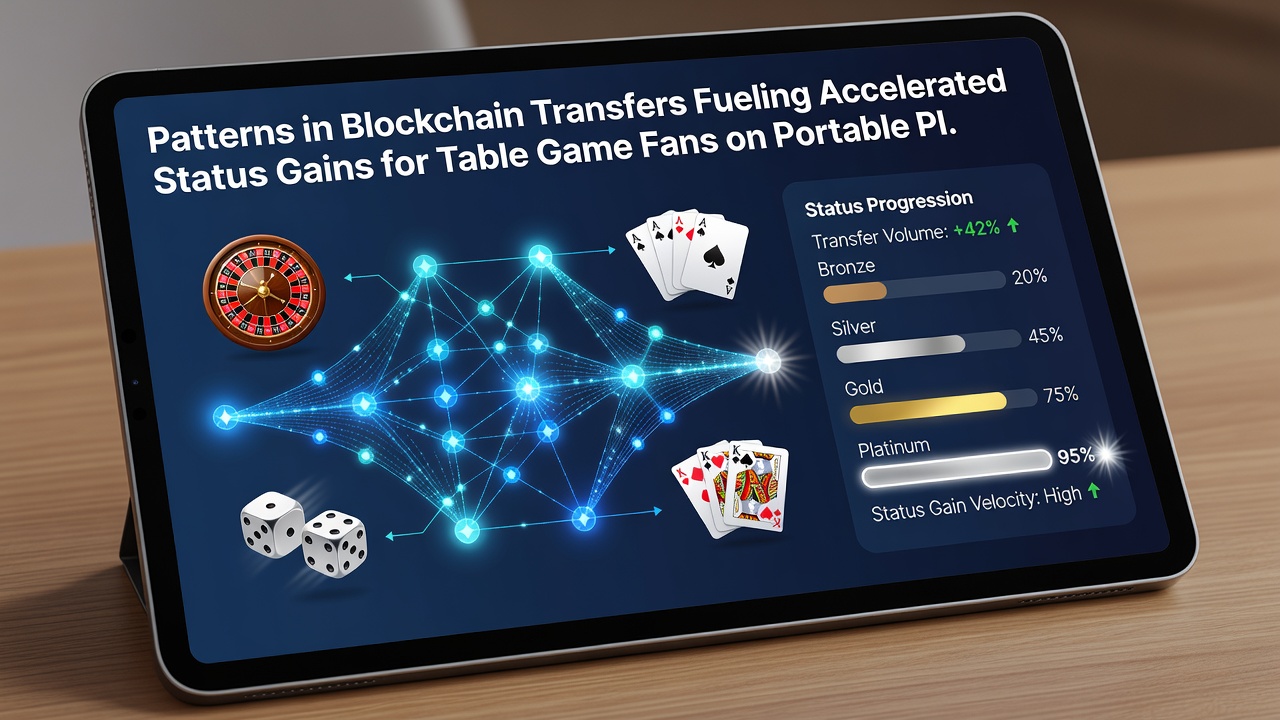
Industry organizations including the European Gaming and Betting Association have compiled cross-border comparisons that isolate transfer frequency as a leading variable in status acceleration. Data sets distinguish between sporadic large transfers and steady micro-transfers, showing the latter category produces more consistent tier climbs because algorithms weight ongoing engagement over single-event spikes. Portable platforms leverage these distinctions to automate bonus allocations that further reinforce the cycle.
Wallet Analytics Driving Platform Adjustments
Operators examine public ledger entries to map transfer graphs that predict when a user approaches the next loyalty threshold, and adjustments to bonus structures now reflect these predictive models. Table game sections on mobile applications display status meters that update immediately after blockchain confirmations, creating visible feedback loops absent in slower payment environments. Research papers published by European university consortia demonstrate that such transparency increases session retention while simultaneously shortening the calendar time to elite tier access.
Patterns also surface when players route transfers through specific wallet addresses linked to multiple accounts, a behavior regulators monitor for compliance yet which simultaneously accelerates individual status gains when activity remains within approved parameters. Mobile platforms integrate these signals into tier calculators that reward consistent blockchain engagement with accelerated point multipliers during designated periods.
Conclusion
Blockchain transfer patterns continue to reshape how table game participants on portable platforms advance through loyalty structures, and records maintained by diverse regulatory bodies and research groups document measurable differences in progression speed. Continued monitoring of on-chain activity through the remainder of 2026 will clarify whether these dynamics persist across expanding markets and new platform iterations.