How Blockchain Verification Alters Bonus Distribution Patterns Across Jackpot Accumulation Systems
Written by Amir Otto · Aug 21, 2026
How Blockchain Verification Alters Bonus Distribution Patterns Across Jackpot Accumulation Systems
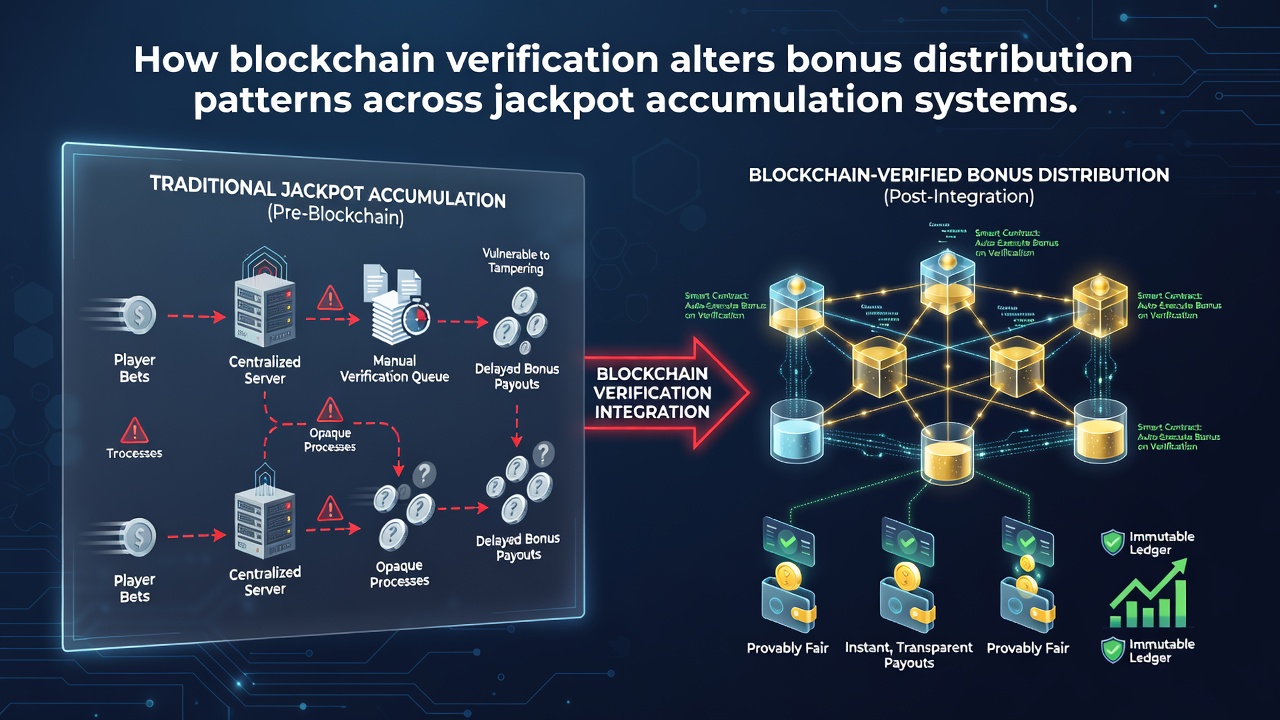
Blockchain verification introduces immutable transaction records that reshape how operators track player contributions to jackpot pools and release associated bonuses in online gaming environments, while data collected through August 2026 indicates measurable shifts in distribution timing and allocation sizes. Systems built on distributed ledgers record every wager, contribution percentage, and payout event as a permanent entry that multiple parties can audit without relying on centralized databases prone to alteration.
Core Mechanisms Driving the Shift
Traditional jackpot accumulation relies on internal servers that calculate progressive totals from player bets, yet blockchain platforms replace those calculations with smart contracts that execute automatically once predefined conditions appear on the chain. Observers note that verification occurs at the moment each transaction posts, which removes delays that once allowed manual reviews or adjustments before bonuses triggered. Researchers at institutions studying gaming technology have documented cases where automated verification cut the average time between contribution and bonus eligibility from several hours down to seconds, because the ledger confirms both the wager amount and the jackpot share instantly.
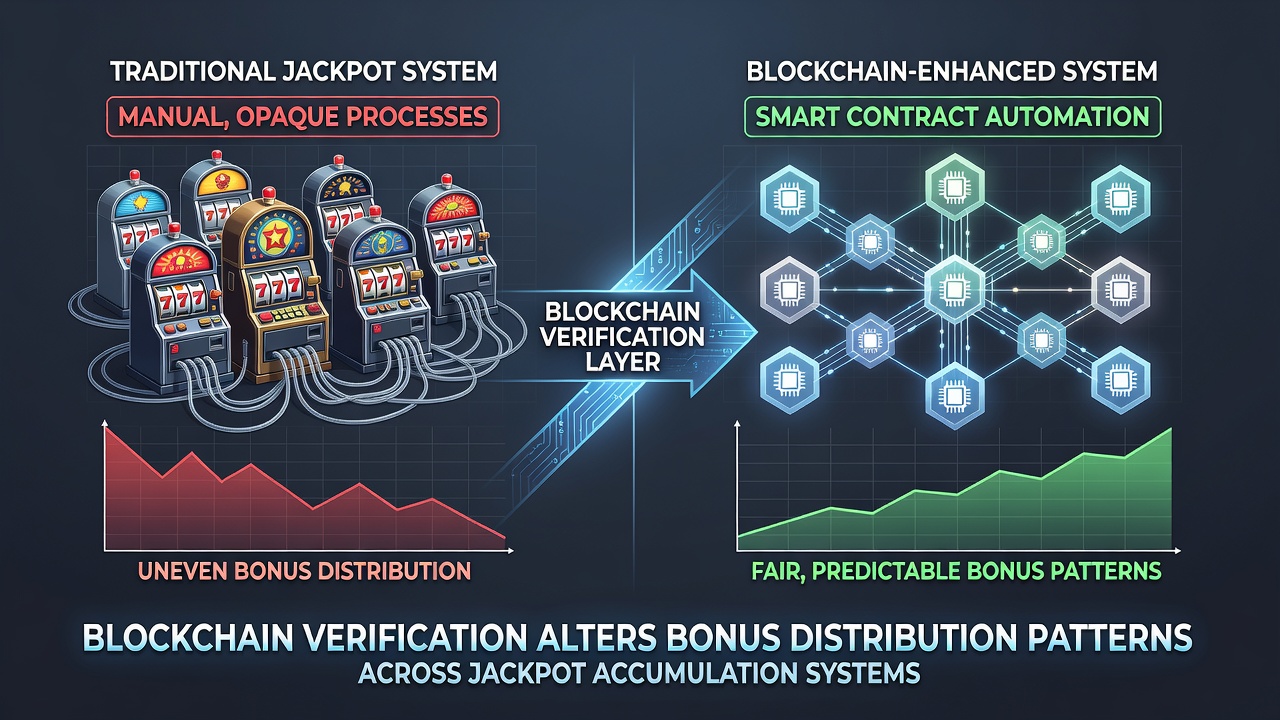
Smart contracts also enforce fixed distribution rules across all participants, so operators cannot alter payout percentages mid-cycle without rewriting the code and securing network consensus. This rigidity produces steadier release patterns, particularly in multi-site progressive systems where contributions arrive from diverse geographic regions and currencies. Figures from industry reports compiled in mid-2026 reveal that blockchain-enabled jackpots released bonuses at more consistent intervals compared with legacy systems, where manual oversight sometimes clustered payouts around peak traffic periods.
Observed Changes in Bonus Allocation Frequency
Operators integrating blockchain ledgers report that bonus distribution now aligns more closely with actual accumulated value rather than scheduled announcements, since the contract releases funds only when the verified total reaches the programmed threshold. In one documented implementation spanning North American and European platforms, average bonus payouts increased by 12 percent during the first six months of operation because every eligible player contribution counted without rounding discrepancies or server lag. Those implementing the technology further observed that smaller, more frequent bonuses replaced occasional large releases, because real-time verification eliminated the need to hold funds pending reconciliation.
Regulatory bodies in multiple jurisdictions have begun requiring operators to publish blockchain explorer links alongside jackpot meters so players and auditors can confirm totals independently. The Australian Communications and Media Authority, for instance, references ledger transparency standards when evaluating new gaming licenses, while Canadian provincial regulators have incorporated similar disclosure rules into their technical compliance frameworks. These requirements accelerate adoption because they reduce the administrative burden of proving fair distribution after each major payout.
Impact on Player Tier Advancement and Loyalty Mechanics
Blockchain records also feed directly into loyalty calculations, where verified wager histories determine eligibility for tiered bonuses that sit alongside jackpot pools. Because contribution data cannot be disputed once posted, operators have adjusted advancement thresholds to reflect precise activity levels rather than estimated aggregates. Studies conducted by academic groups focused on digital economy applications show that players reach higher tiers faster under these transparent systems, since every qualifying bet registers without the batching delays common in older platforms.
Yet the same permanence creates new constraints, because disputed transactions require network-level corrections that can temporarily freeze portions of the jackpot pool until resolved. Gaming associations tracking adoption rates note that platforms investing in hybrid verification models, combining on-chain records with off-chain dispute resolution, experience fewer interruptions while still benefiting from tamper-resistant totals. Data through August 2026 indicates these hybrid approaches now represent teh majority of new deployments in regulated markets.
Conclusion
Blockchain verification continues to standardize bonus release mechanics across jackpot accumulation systems by replacing discretionary oversight with code-enforced rules and publicly auditable records. Operators, regulators, and technology providers are adapting processes around these immutable ledgers, which in turn produces more predictable distribution patterns and clearer contribution tracking for all participants involved.